Case study
Baby Ketten Karaoke
Sixteen years of software for Portland's favorite karaoke: an iPhone app, a songbook that has answered over two million searches, a private-room system that carried the business through the pandemic, and a 2026 rebuild that nobody noticed.
- Client
- Baby Ketten Karaoke, Portland, OR
- Working together
- Since 2010
- My role
- Engineer, maintainer and the owners' point of contact
- Built with
- A small team
2010 · The app
It started with an iPhone app.
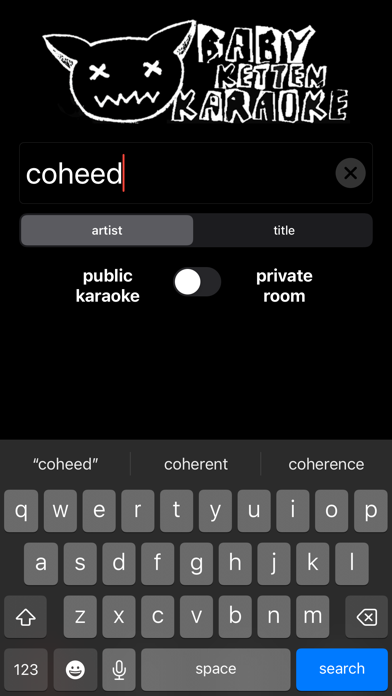
Baby Ketten began as a weekly karaoke night in Portland with a famously deep catalog of its own tracks. The New York Times later called it America's greatest karaoke night. In June 2010 the Baby Ketten app went live on the App Store, so singers could search that catalog from their phones, save their favorites and see where the next night was.
It's still there sixteen years later, and it has kept growing with the business:
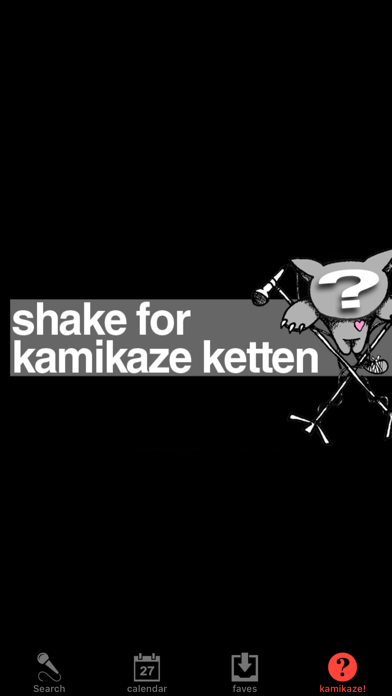
- Shake for Kamikaze Ketten. Shake your phone and the app dares you with a random song. It's been in the app since the first summer.
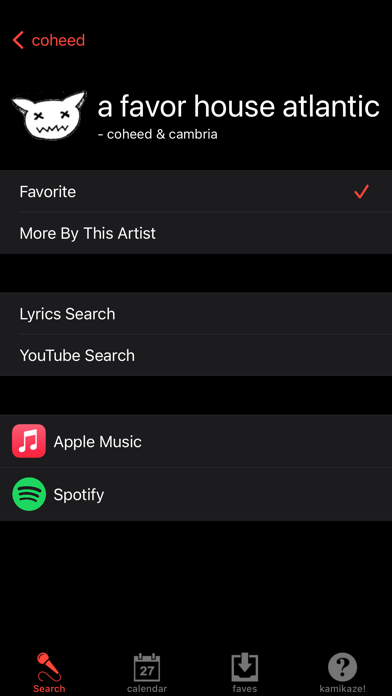
- Lyrics and YouTube search on every song, so you can practice before your turn.
- A redesign for each new iPhone era, from iOS 7 in 2013 to a new version 4 in 2023.
- A public karaoke / private room switch once the rooms opened, so each room's own song list is one tap away, plus buttons to play any song in Apple Music or Spotify.
- Rewritten this year in modern Swift, so it's ready for the next decade.
2013 · The songbook
One catalog, everywhere singers look.
In 2013 I built the songbook service behind the app. The owners upload their song list and it's searchable right away, by artist or title, from the app, the Baby Ketten website and later the private rooms. It has answered more than 2.2 million searches since it started counting in 2014.
2019 · The rooms
The rooms that saved the business.
In 2019 Baby Ketten opened the Baby Ketten Klub, a venue with private karaoke rooms, and those rooms needed a system that didn't exist yet. Then the pandemic hit. Big karaoke nights were off, and in 2020 the private rooms went from a new idea to the thing keeping the business going.
I built it with a small team. Another engineer and I built the backend and the software that runs in each room, and a third built the app singers use on their phones.
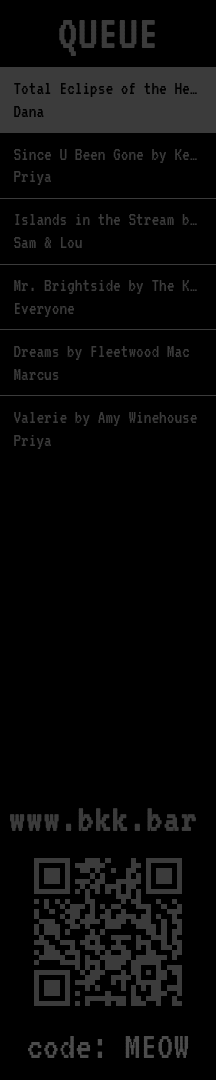
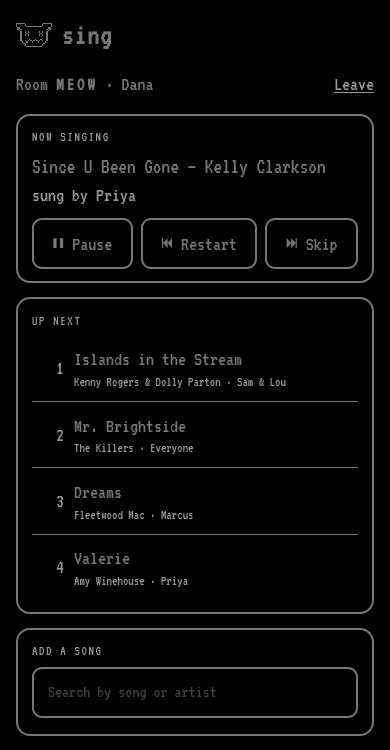
A group checks in and scans the code on the TV, and everyone can search and queue songs from their own phone. The TV plays the queue. A small PC in each room keeps its own copy of the song library, so the music never waits on the internet. Staff manage bookings and screens for each venue, and the owners can see each venue's revenue and which rooms are live right now.
Every year since
The person you call.
Building it was the start. Since then I've been the one who keeps it running, fixes it when something breaks on a Saturday night, and works with the owner on what comes next. Sixteen years in, we're friends as well.
Small improvements, every year
- The songbook goes live, and the app's search switches over to it.
- Song list uploads are processed in the browser, so the owners' huge catalog exports go up quickly without straining the server.
- The first version of the room system, built in about two months: bookings, room codes, a shared queue, and play, pause and skip.
- Video karaoke plays alongside the classic lyric-screen tracks, with a tool to convert the library.
- The songbook, by then seven years old, brought up to date in about a week and moved to an automated server.
- A countdown on the TV as a booking nears its end, so rooms turn over on time.
- QR codes on the TV, so a group joins their room with one scan.
- A separate private-room catalog in the songbook, so the rooms can offer their own song list.
- Remote commands for the room PCs, so updates and fixes don't need a trip to the venue.
- Another round of upgrades to keep the songbook on current, supported software.
- Faster booking tools for staff: quick-add buttons and expired bookings out of the way. With AI tools it took about fifteen minutes and cost $1.76.
- The big rebuild, below.
2026 · The rebuild
Rebuilding the engine while the car is moving.
By 2026 the songbook was a twelve-year-old app on aging tools, the room system lived on a separate hosting service, and keeping it all patched took more time every year. I wanted it simpler, cheaper to run and easier to look after, without the owner or a single singer noticing a change.
I rewrote the songbook on the small, sturdy stack I now use for all my projects, and moved it onto one server I run, with hourly encrypted backups stored off-site and a restore test every week. AI coding tools did a lot of the typing. My time went into the parts that need judgment: deciding what to keep, and proving the new version behaved exactly like the old one before anyone depended on it.
What the owner got
- The same songbook and the same rooms, with nothing new to learn.
- A phone notification when someone uploads or changes a songbook.
- One server instead of several services, and a smaller hosting bill. (Confirm before/after numbers.)
- Backups nobody has to think about, and a final archive of the old system kept just in case.
What's next · as of October 2026
Still going.
- The room system moves to the new server. A full copy already runs beside the live one, waiting for a quiet night to switch. The rooms get a rebuilt TV player and new software for each room's PC at the same time.
- An owner's view of every venue: revenue per month and which rooms are live right now, on one page.
- A security tune-up for the room system once it has moved, like the one the songbook got during its rebuild.
- The rewritten app ships to the App Store. (Confirm.)
What this means for you
Good software is a long relationship.
- Small, plain tools outlast trendy ones. Parts of this system have run for over a decade.
- Things change: a pandemic, a new venue, a hosting service that gets expensive. It helps to have someone who already knows how everything fits together.
- Modern tools make the big rebuilds affordable, but someone still has to check the work and answer the phone.
In the owner's words
Placeholder for a quote from the owner. One or two sentences about sixteen years of having software that works, and someone to call when it doesn't.
Owner, Baby Ketten Karaoke
Get in touch
Have a system that needs a person behind it?
Tell me what you're running on today and what keeps going wrong. I'll tell you honestly whether I can help.